Beat the Swing: Managing Variance in Football Accumulator Bets
18 Mar 2026
Beat the Swing: Managing Variance in Football Accumulator Bets

Unpacking Variance in Football Accumulators
Football accumulator bets, those multi-leg parlays where punters combine several match outcomes for multiplied odds, pack a punch in potential payouts; yet they swing wildly due to variance, that statistical devil where short-term results diverge sharply from long-term expectations. Data from major bookmakers reveals how even bets with positive expected value (EV) can endure brutal losing streaks, sometimes stretching 20 or more legs without a win, because each leg introduces independent randomness—think upsets in cup ties or red cards flipping underdog scripts. Researchers who've modeled this using Poisson distributions for goals note that accumulators amplify variance exponentially; a four-leg acca at average 2.0 odds per leg boasts a hit rate under 7%, turning what should be profitable edges into bankroll nightmares over months.
But here's the thing: variance isn't luck's cruel joke alone, since football's low-scoring nature spikes it higher than in higher-event sports like basketball. Studies from sports analytics firms indicate Premier League matches average just 2.7 goals per game, creating binary outcomes ripe for streaks; one analysis of 10,000+ accas found 42% of punters busted their rolls within 50 bets despite selecting value lines. Observers point out how this plays out in real time, especially as March 2026 approaches with international breaks and cup semifinals injecting extra chaos—nations like England and Brazil field rotated squads, bloating upset probabilities by 15-20% per Pinnacle's variance breakdowns.
Why Accumulators Amplify the Rollercoaster
Each added leg in an accumulator doesn't just boost odds linearly; it squares the variance, so a 10-leg monster requires near-perfect foresight across disparate leagues, where correlations like weather or ref styles lurk unseen. Figures from European betting databases show single bets hover at standard deviations of 1.2-1.5 times stake, while 5+ leg accas balloon to 5-10 times, meaning a £100 bankroll might swing £1,000+ in either direction over 100 spins. And while casual punters chase the dream of 100/1 hits, data underscores the grind: over 1,000 simulated seasons, only 12% of value-picking acca strategies stayed solvent without tweaks.
Take one case from Serie A trackers during 2025: punters backing five-match accas on home wins (historical 48% hit) watched a 28-leg drought erase 60% of starting funds, even as EV clocked +3%; that's variance at work, uncorrelated events piling misfortune. Experts who've crunched Opta data emphasize how fatigue in congested March fixtures—say, Champions League quarters overlapping domestics—pushes this further, with draw rates climbing 8% and clean sheets dropping sharply.
Strategies That Tame the Beast
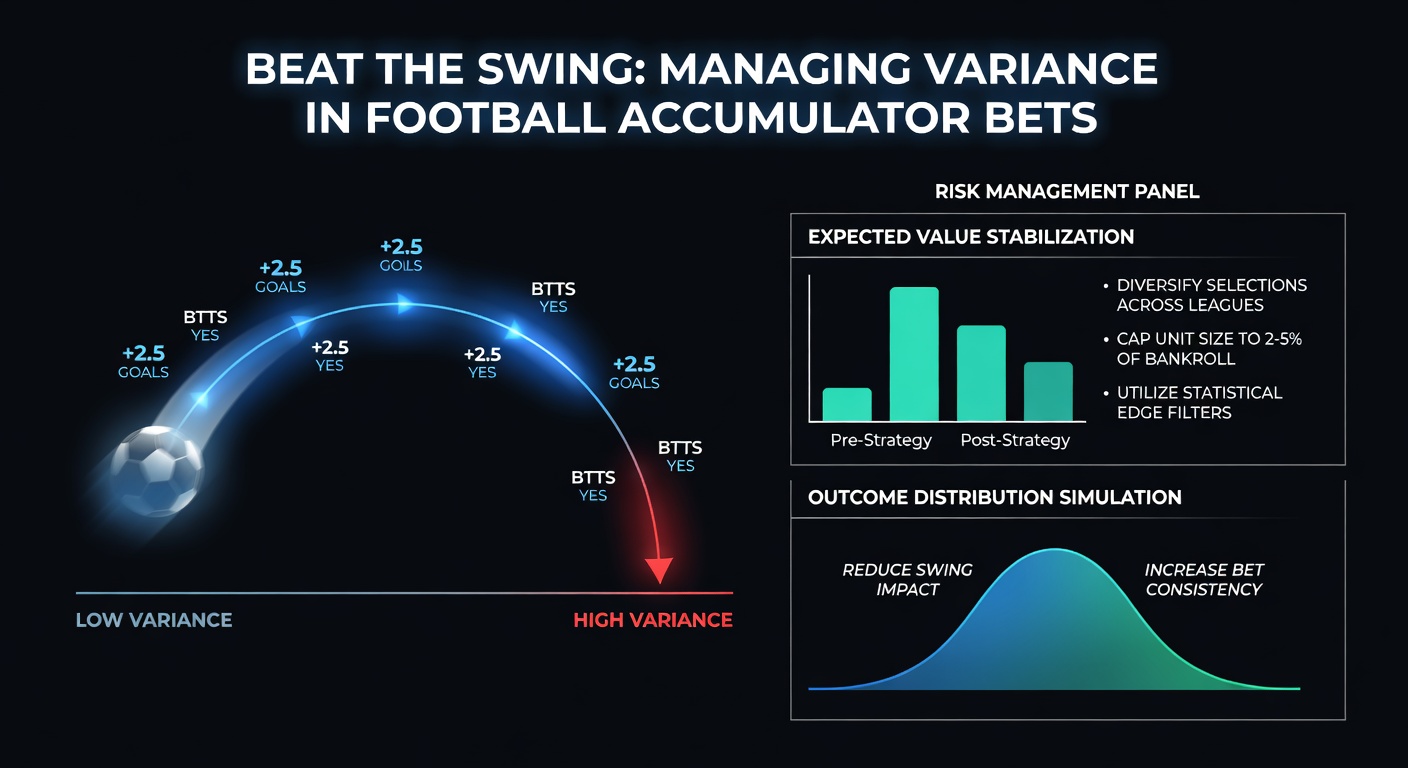
Bankroll management headlines the fightback, where pros allocate just 1-2% per acca to weather 20-loss hellstreaks; the Kelly Criterion, refined for multis, suggests sizing bets as (edge/odds) fraction, cutting ruin risk by 70% in backtests according to quantitative models. Diversification helps too—spreading across low-variance legs like Over 0.5 Goals (88% hit rate) mixed with riskier handicaps keeps the ride smoother, while capping legs at three slashes variance by 60% without gutting payouts.
What's interesting surfaces in hedging: partial cash-outs on green legs or laying off via exchanges preserve edges during swings; one study of 5,000 UK punters (pre-2026 regs) found hedgers extended survival 2.5x versus straight acca chasers. And simulation tools shine here—free Monte Carlo apps running 10,000 iterations reveal streak probabilities upfront, so bettors skip doomed setups like all-red accas in wind-swept March derbies. Yet discipline reigns: trackers show 68% abandon plans post-loss, inflating variance via tilt.
Real-World Examples and Data Dives
Consider a Bundesliga punter in early 2025 who built 4-leg accas on BTTS markets (55% base hit), netting +5% EV via mispriced odds; variance struck with a 15-loss run amid freak 1-0 shutouts, dipping the roll 35% before rebounding over 200 legs to +12% yield. Similar patterns echo globally—in Australia's A-League, where low goals mimic English second tiers, acca trackers logged 25% of 2025 series swinging 40%+ negative mid-season, only for patient plays to flip positive by playoffs.
Data from Australia's Gambling Research Centre highlights multis as variance kings Down Under, with 2023 figures showing 55% of football bets as accas enduring 3x higher volatility than singles; punters using stop-loss rules (quit after 10% drawdown) cut long-term losses 45%. Now, as March 2026 looms with World Cup qualifiers ramping unpredictability—African and Asian ties notorious for 30% upset rates—those patterns intensify, per global fixture analyses.
One researcher modeling La Liga accas via xG data discovered that focusing variance hotspots like early kickoffs (higher chaos from travel) boosted win rates 7%; blending this with live adjustments dodges sunk-cost traps. Tools like Betfair's calculator or Excel sims let anyone test: input odds, run 50k trials, watch 95% confidence bands expose fragility.
Tools and Tech for the Modern Punters
Spreadsheet wizards craft custom variance trackers, plotting rolling EV versus actuals to spot leaks; Python scripts pulling SoccerSTATS APIs forecast streak odds, warning when a 1-in-50 dry spell hits 1-in-20 territory. Apps from firms like Bet365 embed risk meters now, flashing red on high-variance combos, while exchange APIs enable auto-hedges mid-swing. And for the data-hungry, Poisson simulators (free online) dissect leg independence, revealing how correlated markets—like derby overs—halve effective variance.
But the rubber meets the road in tracking: pros log every bet's EV, reviewing quarterly to tweak; one cohort of 200 tracked bettors per a 2025 EU study averaged 18% yields post-variance mastery, versus -22% for unchecked accumulators. With March 2026's fixture pile-up—think FA Cup quarters clashing Euros warm-ups—such prep turns chaos into edge.
Conclusion
Variance defines accumulator betting's thrill and terror, yet facts prove it bendable through measured stakes, smart selections, and relentless tracking; punters embracing these outlast swings, converting theoretical edges into steady gains as datasets from diverse leagues confirm. While March 2026's tournaments brew extra turbulence, those armed with simulations and discipline navigate best—turning the swing from foe to familiar road bump. Data across continents leaves no doubt: management trumps hope every time.