9 Aug 2026
Coastal Climate Patterns and Their Effects on Equine Performance at UK Seaside Tracks
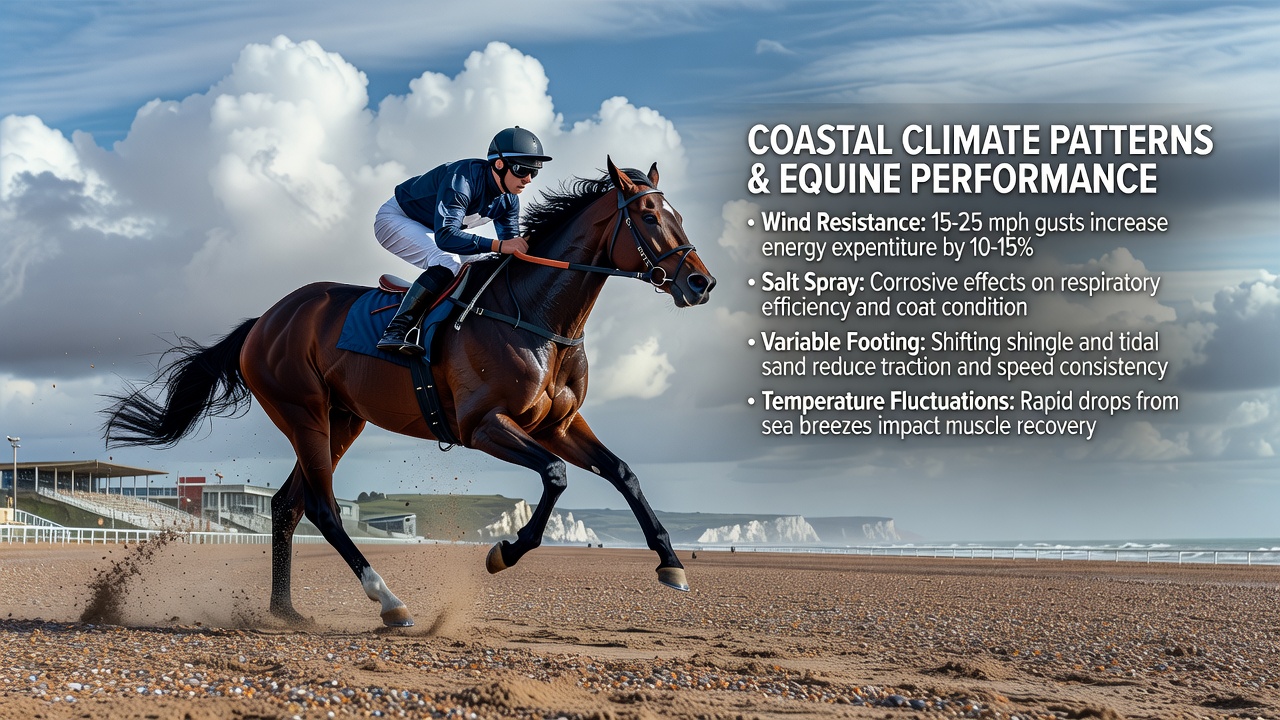
Coastal regions in the United Kingdom present distinct meteorological conditions that influence horse racing venues situated near the sea, and these patterns affect equine physiology along with track surfaces at locations such as Brighton, Great Yarmouth and Musselburgh. Wind speeds often exceed inland averages because open water offers less friction, while humidity levels fluctuate with tidal cycles and sea spray carries salt particles that settle on equipment and animal coats. Temperature ranges stay milder than continental interiors because of oceanic moderation, yet sudden shifts occur when Atlantic fronts collide with local breezes.
Key Meteorological Factors at Seaside Venues
Data collected by the Met Office shows that average wind velocities at coastal tracks reach 15 to 25 knots during summer months, and gusts can climb higher when low-pressure systems track across the North Sea. Such airflow increases evaporative cooling on horses during exercise, which alters heart rates and sweat rates compared with calmer inland circuits. Salt-laden air adds another variable because it accelerates corrosion on metal tack and may irritate respiratory passages when concentrations rise during onshore winds.
Precipitation patterns differ as well because coastal convergence zones generate brief but intense showers, especially in late afternoon when land-sea temperature gradients peak. Track maintainers at these venues therefore adjust watering schedules more frequently than their counterparts farther inland, and surface firmness can change within a single afternoon. Researchers from the University of Exeter documented moisture retention differences between turf and synthetic surfaces exposed to sea spray, noting that salt deposits reduce drainage efficiency and extend drying times after rainfall.
Physiological Responses in Equine Athletes
Equine respiratory systems respond to increased airborne salt and humidity through elevated mucus production and altered breathing patterns during high-intensity efforts. Studies published in the Equine Veterinary Journal indicate that horses racing at seaside tracks exhibit slightly higher post-exercise lactate levels when relative humidity exceeds 80 percent, a threshold reached more often near the coast than inland. Body temperature regulation benefits from stronger breezes that enhance convective heat loss, yet the same winds can create uneven cooling across muscle groups if animals change direction relative to the prevailing flow.
Coastal tracks also experience larger diurnal temperature swings during periods of clear skies because radiative cooling over sand and shingle differs from grass-dominated inland sites. Trainers adjust warm-up routines accordingly, extending trotting phases to maintain muscle elasticity when morning air remains cooler than expected. Observations compiled during the 2025 flat season revealed that horses with prior experience at these venues adapted faster to wind shifts than debutants, suggesting a learned component to performance under variable conditions.
Track Surface Interactions and Seasonal Trends
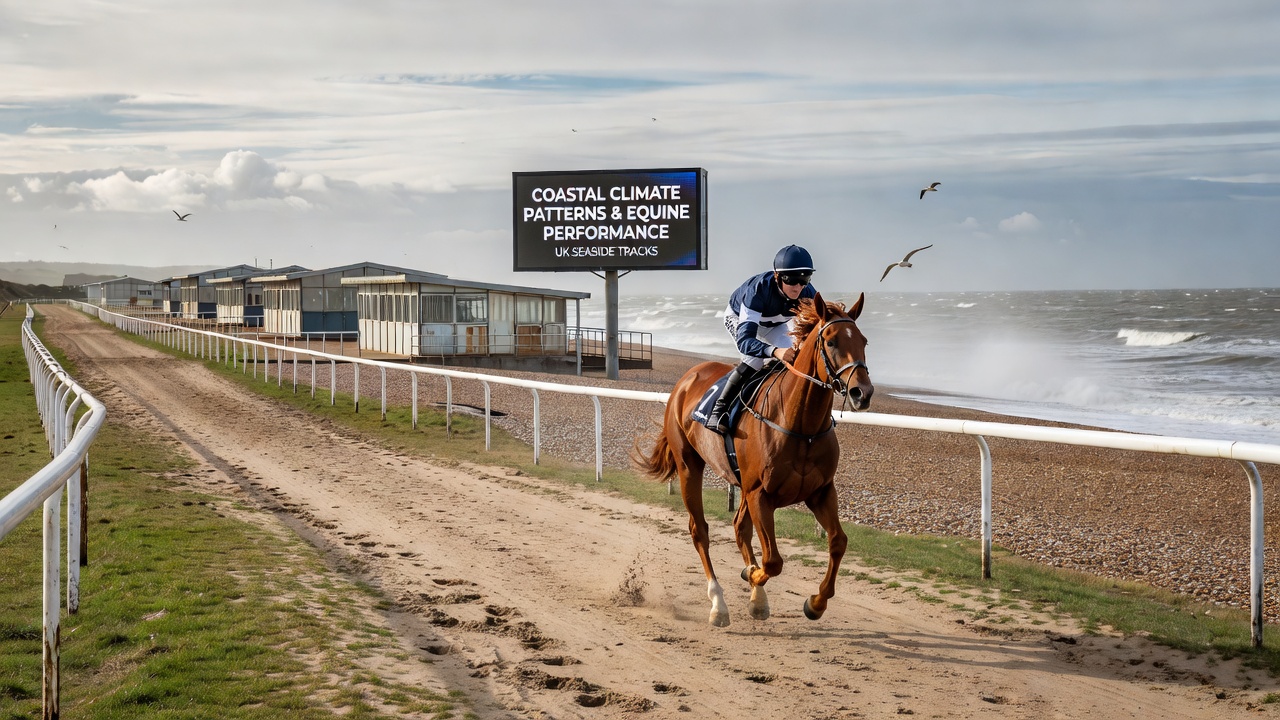
Ground conditions at seaside circuits respond rapidly to wind-driven evaporation and salt accumulation, and maintenance crews monitor salinity readings alongside moisture content to predict firmness changes. In August 2026 forecasters anticipate continued influence from a strengthening Azores high that could suppress rainfall totals while maintaining brisk westerlies, potentially producing firmer going than the five-year average for late summer fixtures. Such conditions favor horses with proven ability on quick surfaces yet increase the risk of superficial injuries when footing hardens unevenly around cambered bends.
Longer-term records from the British Atmospheric Data Centre indicate a gradual rise in mean sea-surface temperatures along the English Channel and North Sea coasts since 1990, and this trend correlates with extended grass-growing seasons that alter track maintenance calendars. Course managers now apply fertilizers later into autumn and employ additional aeration passes to counteract compaction caused by heavier traffic on softer winter ground. These adjustments help preserve consistent stride lengths for competing horses even when coastal storms deliver prolonged rainfall.
Case Examples from Specific Venues
Brighton Racecourse sits on chalk downland that slopes toward the English Channel, and prevailing south-westerlies sweep directly across the home straight, creating a headwind for runners in the final furlong during much of the summer calendar. Jockeys report that horses must expend extra energy overcoming this resistance, and sectional timing data collected over multiple seasons confirms slower closing splits when wind speeds surpass 20 knots. At Great Yarmouth the straight course runs parallel to the shoreline, allowing crosswinds to push lighter-framed animals toward the stands rail and necessitating subtle steering corrections throughout races.
Musselburgh, located on the Firth of Forth, encounters northerly gusts channeled between the Pentland Hills and the sea, and these flows often carry lower temperatures even in midsummer. Horses traveling from southern stables sometimes require an additional acclimatization day because the cooler, saltier air differs markedly from conditions at Newmarket or Ascot. Trainers who schedule such arrivals earlier in the week observe steadier performance metrics across trial gallops compared with same-day transport.
Conclusion
Coastal climate patterns shape both immediate race-day variables and longer-term training adaptations at UK seaside tracks through their effects on wind, humidity, salinity and temperature gradients. Continued monitoring by meteorological agencies and equine research institutions supplies the data needed to refine preparation protocols and surface management practices. As sea-surface temperatures evolve, these venues will continue to present distinctive challenges that differentiate them from inland counterparts while offering measurable opportunities for horses and connections attuned to the local conditions.