29 May 2026
Elevation Patterns and Goal Production Trends Across South American Football Leagues
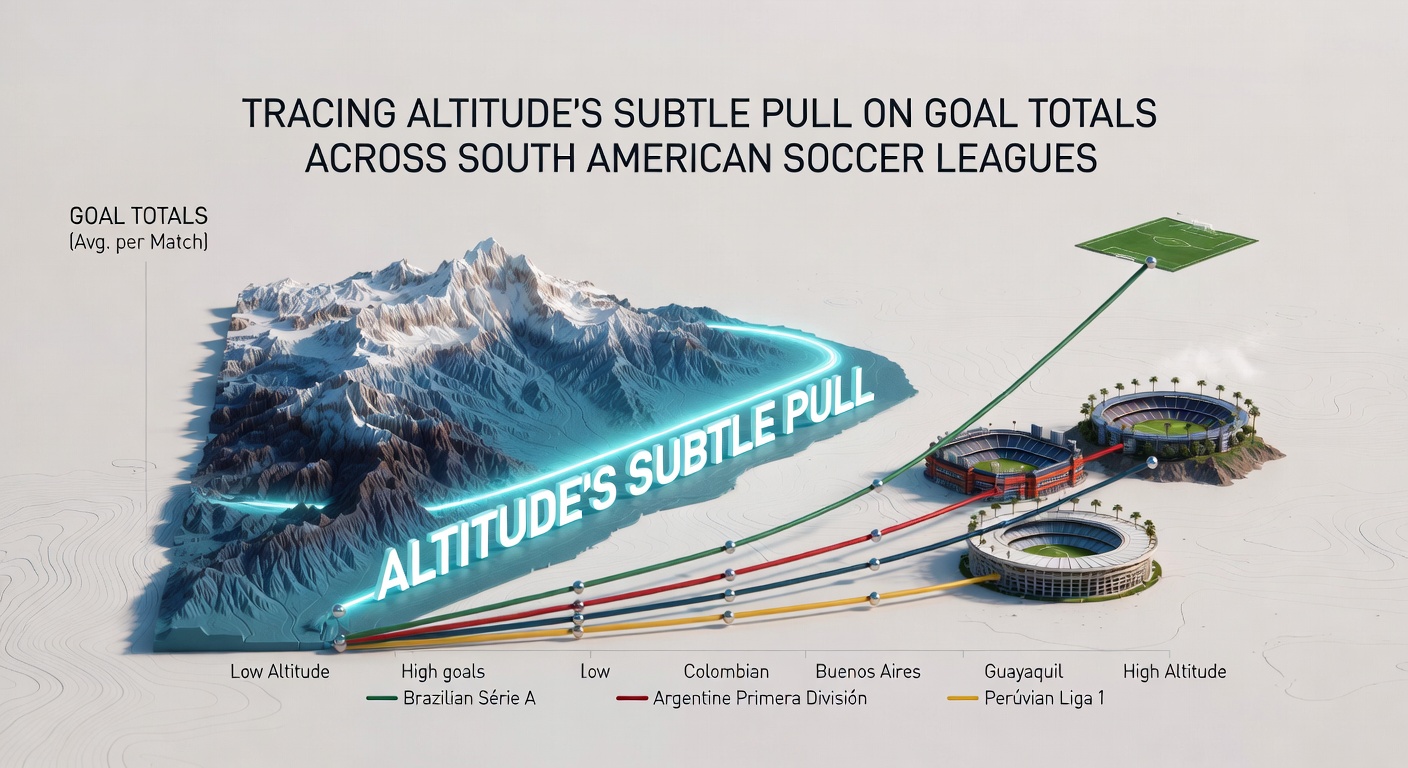
South American soccer leagues feature dramatic elevation differences that shape match outcomes in measurable ways, with data from domestic competitions showing consistent variations in goal averages tied to stadium locations. Researchers tracking results from Argentina's Primera División through Bolivia's top flight have documented how thinner air at higher elevations alters ball behavior and player endurance during ninety-minute contests.
Geographic Distribution of Stadium Elevations
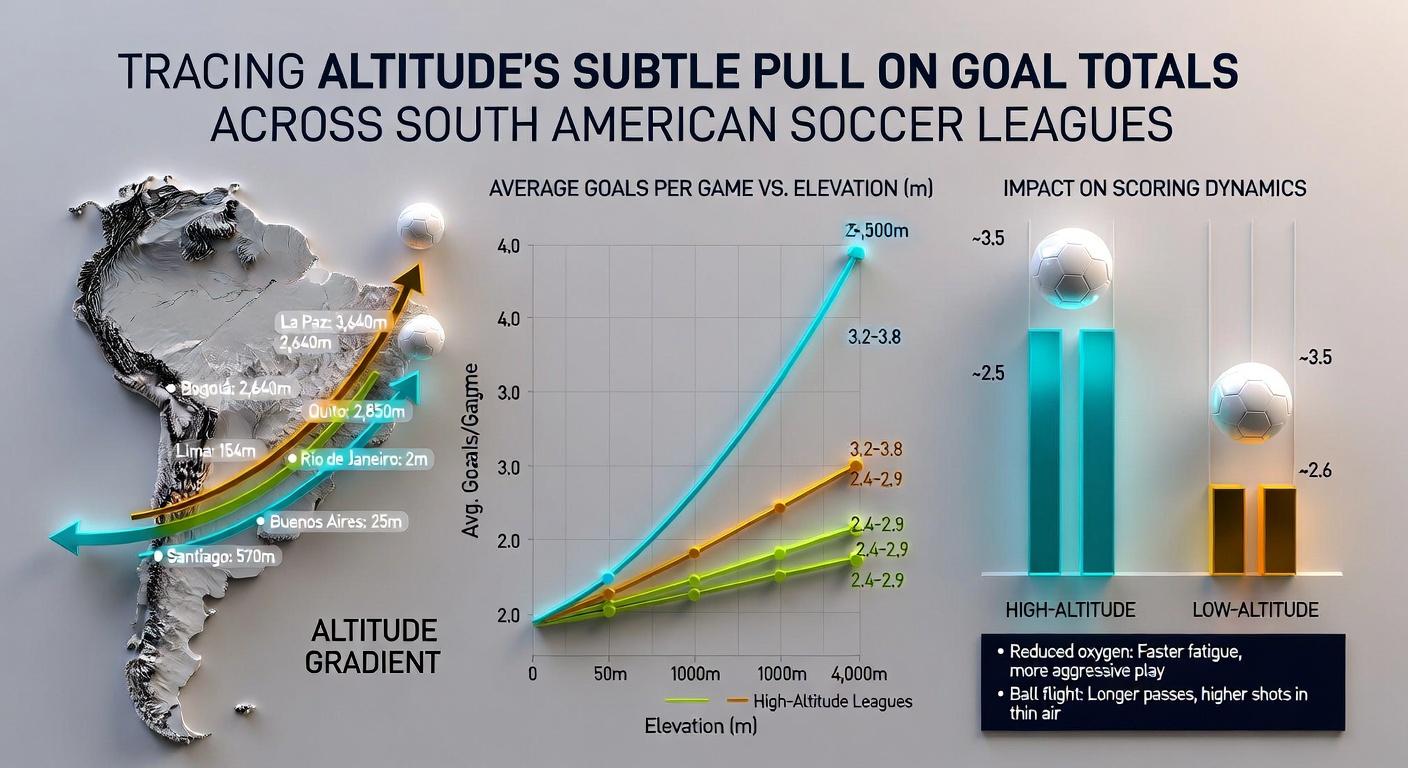
Leagues across the continent host matches at sites ranging from sea-level venues in Uruguay and coastal Brazil to stadiums exceeding 3,600 meters in Bolivia's capital. Quito's Estadio Olímpico Atahualpa sits near 2,800 meters, while Bogotá's facilities reach around 2,600 meters, creating repeated test cases for performance analysis. Teams based at these altitudes often face opponents traveling from lower regions, and match statistics compiled over multiple seasons reveal patterns in total goals scored that align with these elevation gaps.
Ball Flight and Aerodynamic Changes
At higher elevations the reduced air density allows the ball to travel farther and faster when struck with the same force, a factor confirmed through laboratory simulations and on-pitch measurements collected by sports science groups. This aerodynamic shift can increase the frequency of long-range strikes finding the net, while goalkeepers face altered trajectories that complicate reaction times. Data from matches in La Paz compared with those in Montevideo demonstrate higher instances of goals from outside the penalty area when elevation exceeds 2,500 meters, although precise percentages vary by season and weather conditions.
Physiological Demands on Players
Lower oxygen availability at altitude accelerates fatigue for visiting players unaccustomed to the conditions, leading to shifts in team pressing intensity and defensive organization as matches progress. Studies conducted by exercise physiology departments at regional universities have measured heart rate spikes and recovery intervals, showing that athletes from sea-level squads cover less high-intensity distance in the second half when competing above 2,000 meters. Home sides maintain steadier work rates because of long-term adaptation, and league-wide tracking indicates this endurance gap contributes to timing patterns in goal scoring, with more decisive moments occurring later in games hosted at significant heights.
League-by-League Goal Average Comparisons
Analysis of goal totals across ten seasons reveals that Bolivian league matches average higher scoring outputs than those in Argentina or Chile, yet the margin narrows when both teams share similar acclimatization profiles. Peruvian and Ecuadorian competitions, with their mix of coastal and Andean venues, produce intermediate figures that reflect the elevation spread within each schedule. CONMEBOL tournament records further illustrate how Copa Libertadores fixtures at altitude venues often diverge from sea-level encounters in total goals, though external factors such as pitch quality and squad rotation also influence results.
Statistical Controls and Research Findings
Independent research groups have applied regression models to isolate altitude effects from variables like team strength and weather, and findings consistently point to modest but detectable influences on scoring volume. One report from a Brazilian sports institute examined over 4,000 matches and noted that elevation differences exceeding 1,500 meters correlate with shifts in expected goal counts, while smaller gradients produce effects too subtle for reliable prediction. Observers note that such data sets continue to expand as tracking technology improves across domestic federations.
Adaptation Strategies Observed in Practice
Coaching staffs in affected leagues have adjusted preparation routines by incorporating altitude simulation sessions or arriving early for acclimatization when schedules permit. These approaches appear in fixture lists where teams travel between extremes, and performance metrics tracked by national federations show gradual reductions in the home advantage gap over repeated exposures. The patterns hold across both league play and international qualifiers scheduled through early 2026, with May 2026 fixtures already drawing attention for their potential to add fresh data points to existing models.
Conclusion
Comprehensive examination of South American soccer demonstrates that altitude exerts a measurable yet nuanced effect on goal production, visible through aggregated match statistics and physiological research. Continued collection of performance data across varying elevations will refine understanding of these dynamics in the seasons ahead.