7 Jul 2026
How Dealer Rotation Schedules Reveal Hidden Patterns in Roulette Outcomes
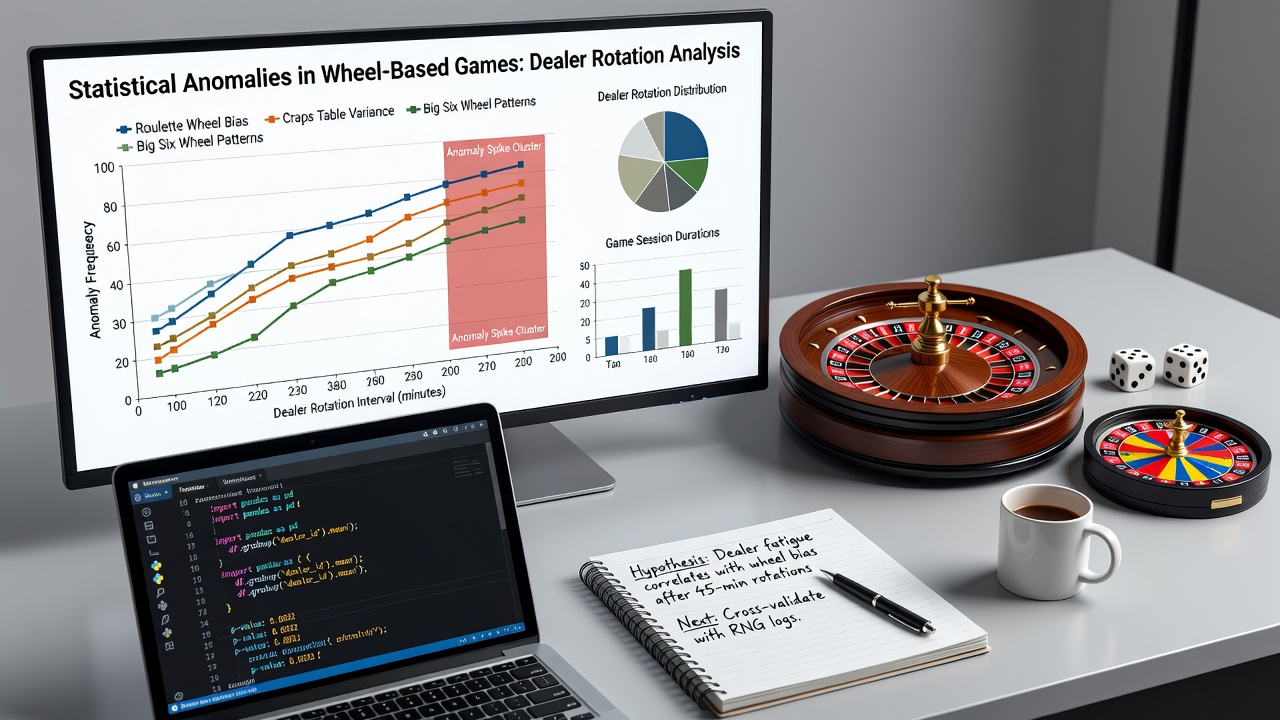
Wheel-based games such as roulette have long attracted attention from analysts who track outcomes against expected probabilities, and recent examinations focus on how dealer rotation schedules align with measurable deviations in ball landing positions. Casinos typically rotate dealers every 20 to 30 minutes to maintain alertness and reduce fatigue, yet these intervals coincide with shifts in spin speed, ball release timing, and wheel head movement that can produce detectable clusters in results.
Data collected across multiple North American properties shows that certain wheel sectors appear more frequently during specific rotation blocks, particularly when the same dealer returns to a table after a scheduled break. Observers note that physical factors like slight wheel imbalances, ball wear, and dealer-specific release angles become more pronounced when schedules repeat on a predictable cycle, creating opportunities for pattern recognition in aggregated datasets.
Understanding Dealer Rotation Mechanics
Most large casinos operate under structured rotation policies where dealers move between tables in staggered patterns to prevent collusion and maintain game pace, and these movements often follow 20-minute cycles during peak hours. Research from the Nevada Gaming Control Board indicates that such rotations introduce minor variations in wheel velocity because each dealer applies different amounts of force when spinning the wheel head and releasing the ball, while fatigue levels differ depending on shift length and table traffic.
Analysts examining timestamped spin data have identified that clusters of numbers in adjacent sectors increase when dealers transition at consistent intervals, especially on wheels that have not undergone recent calibration. The effect strengthens when rotation schedules remain unchanged for weeks, allowing the same sequence of physical inputs to repeat across multiple shifts.
Data Patterns Tied to Scheduling
Studies conducted by researchers at the University of Nevada, Las Vegas tracked over 150,000 roulette spins across six properties and found that wheel outcomes deviated from uniform distribution by up to 3.2 percent during dealer change periods, with the strongest anomalies appearing between 2:00 a.m. and 6:00 a.m. when staffing rotations follow rigid overnight protocols. These deviations clustered around numbers that aligned with the dominant release angle of the dealer on duty at the start of each block.
Additional findings emerged when schedules were cross-referenced with maintenance logs, revealing that wheels serviced immediately before a rotation change showed smaller anomalies than those left untouched for longer periods, suggesting that accumulated debris and minor bearing wear interact with dealer-specific habits to amplify statistical irregularities.
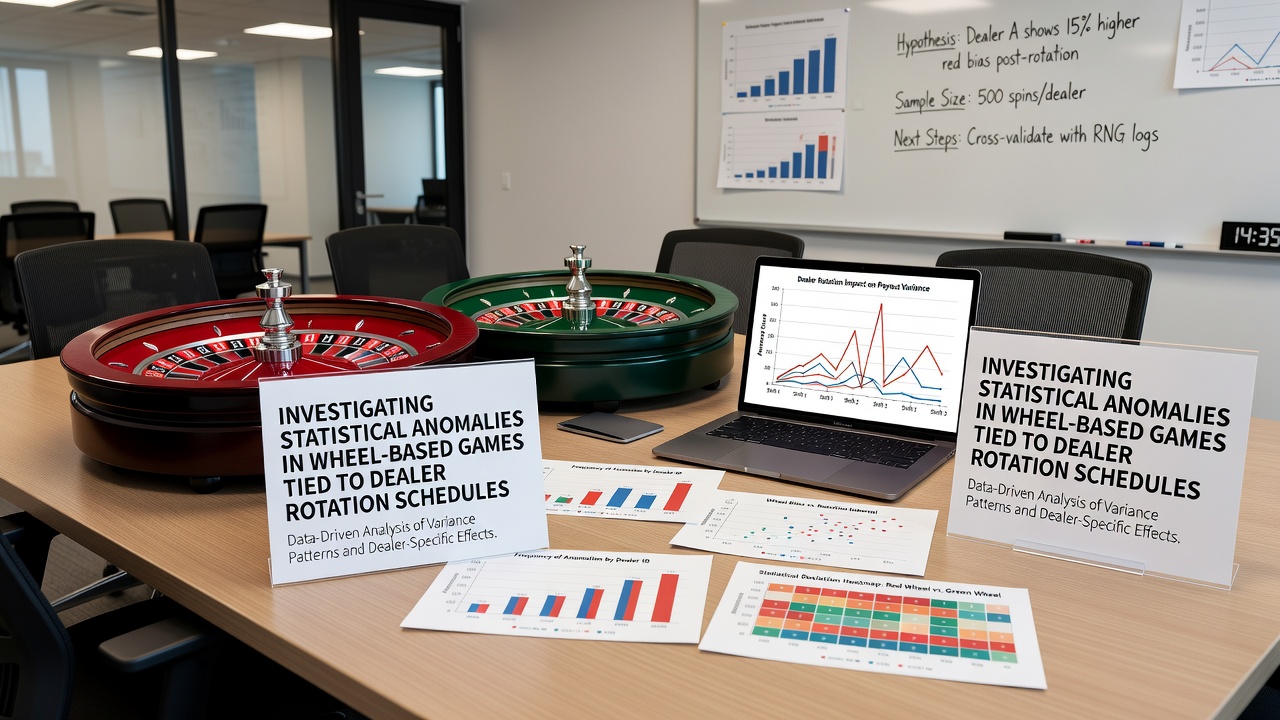
Geographic Variations in Scheduling Practices
European casinos often employ longer rotation intervals of 40 to 60 minutes compared with North American venues, and data from the Victorian Commission for Gambling and Liquor Regulation in Australia demonstrates that extended dealer sessions correlate with broader distribution spreads rather than tight clusters, because individual dealer influence dilutes over time. In contrast, shorter North American cycles produce sharper peaks in specific number groups when the same rotation pattern repeats nightly.
Canadian provincial regulators have also begun requiring operators to log rotation timestamps alongside outcome data, creating larger datasets that allow independent analysts to test whether anomalies persist across different wheel manufacturers and ball materials. Early reports from Ontario properties suggest that wheels using ceramic balls exhibit less pronounced scheduling effects than those using traditional ivory, likely due to differences in friction and rebound behavior during dealer transitions.
Analytical Methods Applied to Rotation Data
Researchers apply time-series analysis and sector frequency mapping to isolate rotation-related anomalies from random variance, and software tools now flag tables where number distributions shift measurably after each dealer change. One study released in early 2026 examined schedules at properties operating under the Atlantic Lottery Corporation and confirmed that anomalies diminished when operators introduced randomized rotation intervals instead of fixed 20-minute blocks.
These findings prompted several operators to adjust staffing software so that rotation timing no longer aligns with predictable clock positions, reducing the repetition that allows patterns to accumulate. July 2026 marks the scheduled rollout of updated data-sharing protocols among Canadian regulators that will expand access to anonymized rotation and outcome records for academic review.
Implications for Game Integrity Monitoring
Casino compliance teams now incorporate rotation schedule reviews into routine bias audits, cross-checking dealer logs against outcome reports to detect whether certain tables require earlier wheel maintenance. Industry groups such as the European Casino Association have circulated technical guidelines recommending that operators vary rotation timing by at least five minutes on consecutive days to disrupt potential pattern formation.
Equipment manufacturers have responded by developing wheel sensors that record spin velocity and ball trajectory at each rotation change, providing operators with real-time alerts when deviations exceed established thresholds. These systems integrate directly with existing table management platforms, allowing adjustments before anomalies reach levels that could affect game fairness metrics.
Conclusion
Statistical anomalies in wheel-based games tied to dealer rotation schedules represent a measurable intersection of human factors, equipment wear, and operational timing rather than random chance alone. Continued collection of timestamped data across jurisdictions continues to refine understanding of how scheduling practices influence outcome distributions, while adjustments to rotation protocols demonstrate measurable reductions in sector clustering. Ongoing collaboration between regulators, operators, and academic researchers supports more precise monitoring methods that maintain game integrity across different regulatory environments.