12 Jul 2026
Soil Composition Insights Guiding Jump Meeting Betting Strategies on Different Terrains

Soil composition data plays a direct role in shaping how bettors approach jump meetings because ground conditions derive from underlying soil profiles that influence drainage, firmness, and moisture retention. Researchers at agricultural institutes have mapped these profiles across major racecourses, revealing patterns where clay-heavy soils retain water longer while sandy mixtures drain rapidly after rainfall. Bettors who incorporate such data adjust their selections based on historical performance records tied to specific soil-derived going descriptions rather than relying solely on recent form.
Jump racing presents unique variables because fences add stress that interacts with terrain firmness, and soil type determines how quickly a course recovers between meetings. Data from multiple seasons shows that horses with proven ability on holding ground often excel when clay content exceeds 40 percent, whereas those suited to quicker surfaces perform better on courses with higher sand fractions. Observers note that course managers now publish soil test summaries ahead of fixtures, allowing bettors to cross-reference these with past results from similar profiles.
Mapping Soil Profiles to Racecourse Conditions
Soil surveys break terrain into categories such as heavy clay, loam, and free-draining sand, each producing distinct going characteristics under wet or dry spells. A loam-dominant course might produce good-to-soft ground after moderate rain because the balanced particle mix allows controlled water movement, while pure clay sites turn soft or heavy more readily. Bettors use these classifications to filter runners whose pedigrees or previous outings align with the expected firmness levels.
In July 2026 updated soil mapping datasets from European agricultural bodies became publicly accessible, enabling more precise comparisons between courses that share similar particle distributions. Those datasets include measurements of organic matter content and pH levels that affect grass root depth and surface resilience, factors that influence how a track rides during sustained jump meetings. Bettors combine the new figures with speed ratings and sectional data to identify horses whose running styles suit the projected ground.
Adjusting Wagering Filters Using Terrain Data
Professional syndicates integrate soil reports into their models by assigning numerical weights to going descriptions derived from particle analysis. When a meeting features multiple races over fences, they prioritize horses with strong records on comparable soil types and discount those whose best efforts occurred on markedly different profiles. This approach reduces exposure on days when weather forecasts suggest rapid changes in moisture levels.
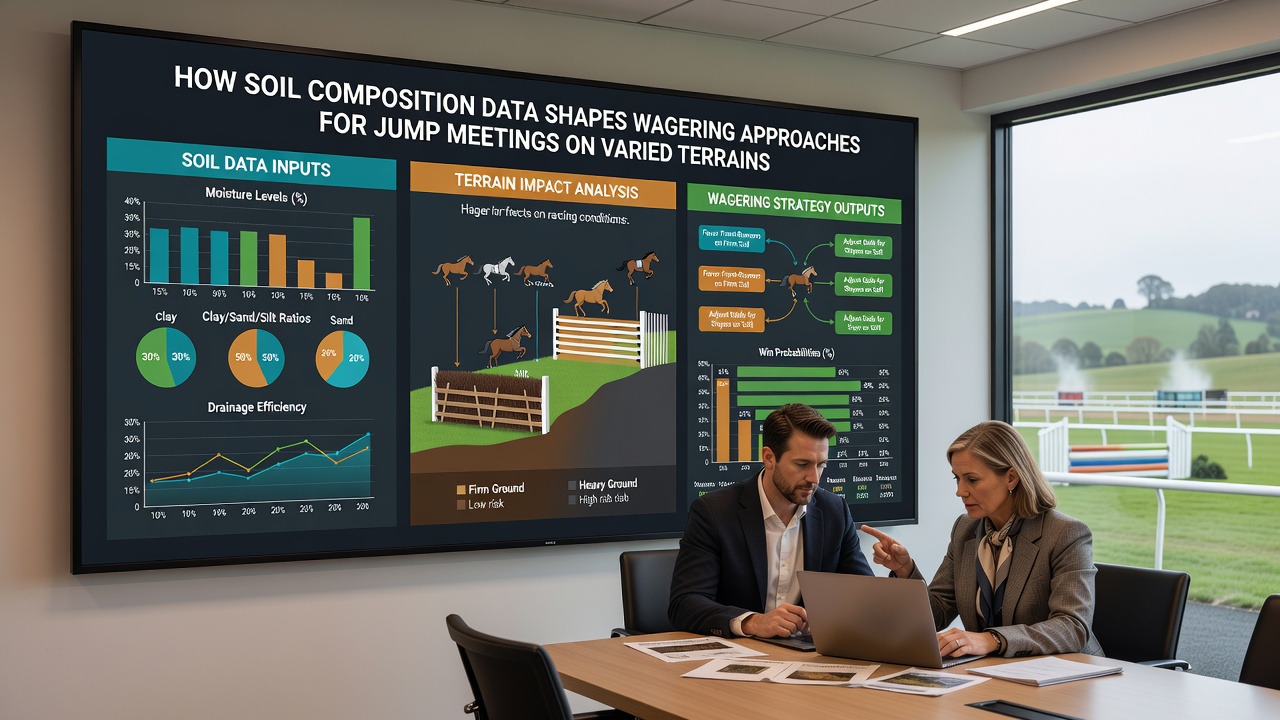
Take one trainer who tracked results across two venues with contrasting soil compositions. The first venue featured high clay content and produced slower times on rain-affected days, while the second venue drained quickly due to sandy subsoil. The trainer's runners showed markedly different strike rates depending on which profile matched the prevailing conditions, prompting bettors to apply similar venue-specific filters when building accumulators or each-way plays.
Case Examples from Recent Seasons
One study published by an agronomy research group examined eight jump courses and correlated soil particle data with winning times over three years. Courses with greater than 50 percent clay content recorded average winning times 8 percent slower than sandier venues under equivalent rainfall, and this gap widened when meetings spanned consecutive days. Bettors who consulted the published tables adjusted stakes downward on speed-oriented horses at the heavier sites.
Another analysis from an international racing federation highlighted how organic matter percentages influence recovery between races. Higher organic content helped maintain consistent firmness despite repeated traffic, allowing certain horses to maintain pace throughout a card. Bettors now scan pre-meeting soil summaries for these percentages when deciding whether to back front-runners or hold-up types.
Future Developments in Data Integration
Technology firms are developing apps that overlay real-time weather projections onto static soil maps, generating updated going forecasts hours before the first race. These tools allow last-minute shifts in betting strategy when unexpected showers alter moisture retention on clay versus sand profiles. Industry reports indicate that adoption of such combined datasets has increased among larger betting operations since 2025.
According to findings from the American Society of Agronomy, continued refinement of particle-size analysis will further narrow the margin between predicted and actual ground conditions at jump venues worldwide. Bettors who stay current with these refinements gain incremental edges when comparing horses across geographically distant meetings that share comparable soil signatures.
Conclusion
Soil composition data supplies an additional layer of objective information that bettors apply when constructing strategies for jump meetings. By matching historical performance to specific particle profiles and moisture behaviors, participants refine their assessments of which runners suit the terrain on any given day. As mapping technologies advance and more detailed reports emerge, the integration of soil metrics into wagering models continues to expand across varied racing jurisdictions.