UK Gambling Commission Issues Timely Reminder to Cheltenham Festival Bookmakers on Money Laundering and Terrorist Financing Safeguards
14 Mar 2026
UK Gambling Commission Issues Timely Reminder to Cheltenham Festival Bookmakers on Money Laundering and Terrorist Financing Safeguards

The Cheltenham Festival Context and the Commission's Proactive Step
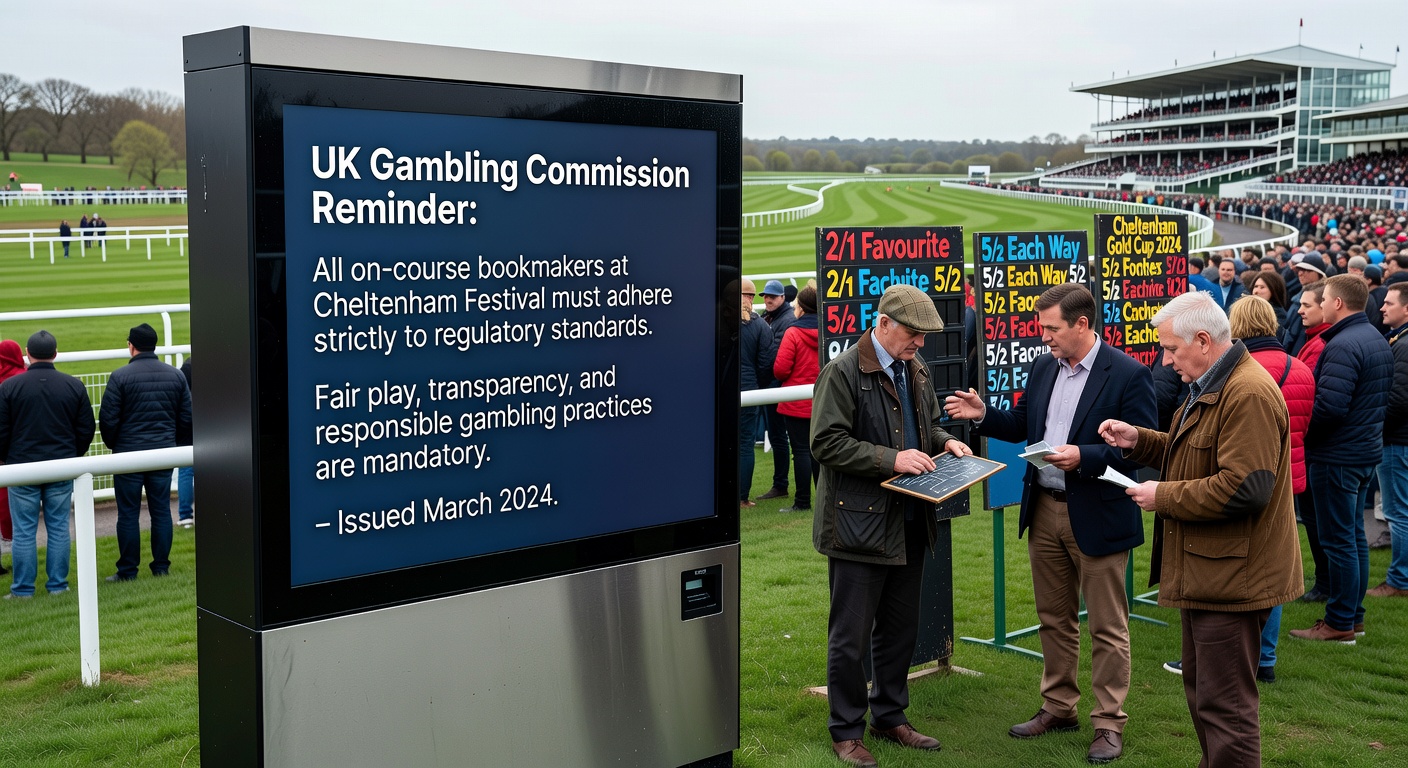
As the UK Gambling Commission gears up for the high-stakes atmosphere of the Cheltenham Festival in March 2026, it has issued a pointed reminder to on-course bookmakers, underscoring their licence obligations to combat money laundering and terrorist financing, especially when vast sums of cash change hands during the event's four intense days of National Hunt racing. This major horse racing fixture, drawing crowds from across the UK and beyond to Prestbury Park in Gloucestershire, sees bookmakers pitching tents ringside, where punters wager freely in a carnival-like setting; yet beneath the excitement, regulators emphasize vigilance against illicit activities that could exploit the cash-heavy environment. The reminder, timed ahead of the festival's Gold Cup climax, highlights how large cash volumes create prime opportunities for suspicious transactions, prompting licensees to sharpen their detection and reporting protocols under established Licence Conditions and Codes of Practice, known as LCCP.
Those familiar with the racing scene know the Cheltenham Festival isn't just about thundering hooves and cheering crowds; it's a financial whirlwind too, with bookmakers handling bets that can run into millions, much of it in physical currency since many punters prefer the tactile thrill of handing over notes rather than tapping cards. Data from past festivals reveals spikes in cash turnover, making it a focal point for anti-money laundering efforts, and the Commission's message drives home that complacency has no place here, even amid the festivities.
Core Obligations Under LCCP: A Breakdown for On-Course Operators
At the heart of the reminder lies LCCP Condition 12.1.1, which mandates that gambling operators, including those manning the pitches at Cheltenham, maintain robust anti-money laundering measures to prevent both money laundering and terrorist financing; this involves implementing effective policies, procedures, and controls tailored to identify and mitigate risks, particularly in scenarios involving high cash inflows like festival betting rings. Licensees must conduct risk assessments specific to their operations, train staff to spot red flags such as unusually large bets without corresponding knowledge of the sport or fragmented deposits designed to evade thresholds, and ensure customer due diligence kicks in when suspicions arise.
But here's the thing: the obligations don't stop at prevention; conditions 15.2.1 and 15.1.2 ramp up the reporting requirements, compelling bookmakers to notify the Commission promptly about key events or suspicions tied to their betting licences, whether it's a punter attempting to place outsized wagers in crisp, sequential banknotes or patterns suggesting layering of illicit funds through multiple small bets. Observers note that during peak events like Cheltenham, where the roar of the crowd drowns out quieter conversations, these controls become crucial, as delays in reporting could allow criminal proceeds to slip through unnoticed. The reminder stresses timely submissions to the National Crime Agency as well, aligning with broader UK financial crime frameworks that demand swift action over hesitation.
What's interesting is how the Commission frames this not as new rules but as a reinforcement of standing duties, urging operators to review their setups ahead of the March 2026 festival; take one bookmaker from a previous event who spotted irregular betting patterns on long-shot horses, reported it under these very conditions, and helped unravel a small-scale laundering scheme — cases like that underscore why vigilance pays off, even if it means turning away business that smells off.
Why Cash-Heavy Events Like Cheltenham Demand Extra Scrutiny
Cheltenham's on-course betting scene thrives on immediacy — punters queue up between races, slapping down cash for the next showdown, from the Champion Hurdle opener to the stamina-testing Gold Cup finale; yet this very dynamism, while fueling the sport's appeal, amplifies risks, as criminals have long eyed racetracks for placing dirty money through bets that either win modestly or lose intentionally to clean funds. The Commission's reminder points out that effective systems must handle not just volume but velocity, detecting when a single punter or group funnels excessive cash in ways that don't match typical racegoer behavior, like betting heavily on obscure markets without prior form study.
And while digital betting dominates elsewhere, the festival's traditional bookies remain cash-centric, processing transactions that bypass electronic trails; experts who've studied these environments have observed how layered bets — splitting large sums across multiple horses or races — can mimic legitimate punter activity, which is why LCCP demands ongoing monitoring and staff empowerment to query and refuse suspicious wagers. Turns out, the reminder arrives at a moment when UK regulators intensify focus on non-remote gambling sectors, following data indicating cash vulnerabilities persist despite online safeguards; for instance, one report highlighted how festivals account for disproportionate ML suspicions relative to their duration, prompting these pre-event nudges.
Licensees face the dual challenge of maintaining flow during packed race days, where queues snake around pitches, yet upholding controls without alienating customers; training programs, often mandated under LCCP, equip staff to balance this, teaching them to log details on high-risk transactions, verify identities where needed, and escalate internally before external reports, all while the starting bell looms for the next race.
Reporting Mechanisms and the Path to Compliance
Under the spotlight of conditions 15.2.1 and 15.1.2, bookmakers must report suspicions without delay, using SARs (Suspicious Activity Reports) to the National Crime Agency, a process the reminder reinforces as non-negotiable for licence holders; failure to do so risks enforcement action, from warnings to fines or licence reviews, as past cases demonstrate where lax reporting led to penalties. The LCCP Condition 12.1.1 dovetails here, requiring not just detection but documented procedures that withstand regulatory audits, including record-keeping for cash transactions above certain thresholds — typically £800 or patterns suggesting structuring.
People who've worked these pitches recall the pressure: a punter with a bulging wallet approaches mid-race buildup, odds boards flickering; staff, trained per LCCP, probe gently — "New to Cheltenham?" or "Following this trainer long?" — and if vibes don't align, they halt, report, and protect the operation's integrity. The Commission's message, circulated via official channels, serves as that pre-festival checklist, ensuring bookmakers calibrate tools like cash counters with transaction logs or ID scanners, all integrated into risk-based approaches suited to the event's frenzy.
So as March 2026 nears, with festival hype building through previews and ante-post markets, operators recalibrate; it's not rocket science, but consistent application separates compliant pitches from those inviting scrutiny, preserving the sport's clean reputation amid its cash-soaked spectacle.
Broader Implications for the Racing Ecosystem
This reminder ripples beyond individual bookmakers to the wider ecosystem, where racecourses, sponsors, and even remote operators linked to on-site promotions share the compliance burden; the Gambling Commission, in highlighting LCCP across the board, signals zero tolerance for blind spots at marquee events, where media glare amplifies any misstep. Data indicates that proactive measures cut suspicion rates, as seen in jurisdictions tightening cash protocols post-scandals; yet at Cheltenham, the blend of tradition and regulation keeps evolving, with bookies adapting software for real-time alerts or partnering with monitoring firms to stay ahead.
Those monitoring the beat have noted how such interventions, though routine, gain urgency at festivals; one expert recounted a scenario from years back where heightened checks nixed a laundering attempt worth tens of thousands, all thanks to vigilant staff invoking these exact conditions — proof that the system's built to work when followed. And with terrorist financing now explicitly flagged, the stakes encompass national security, pushing operators to view every crisp note through a compliance lens.
Now, as punters eye the 2026 renewal, the message lands clear: enjoy the races, but handle the cash clean, or face the Commission's full attention.
Wrapping Up the Regulatory Focus
In essence, the UK Gambling Commission's reminder to Cheltenham Festival bookmakers reaffirms LCCP's backbone — conditions 12.