UK Punter's Shocking Turn: Heart Attack Follows William Hill's Refusal of £285,000 Payout Amid Glitch Claim
12 Apr 2026
UK Punter's Shocking Turn: Heart Attack Follows William Hill's Refusal of £285,000 Payout Amid Glitch Claim

The Dramatic Sequence of Events
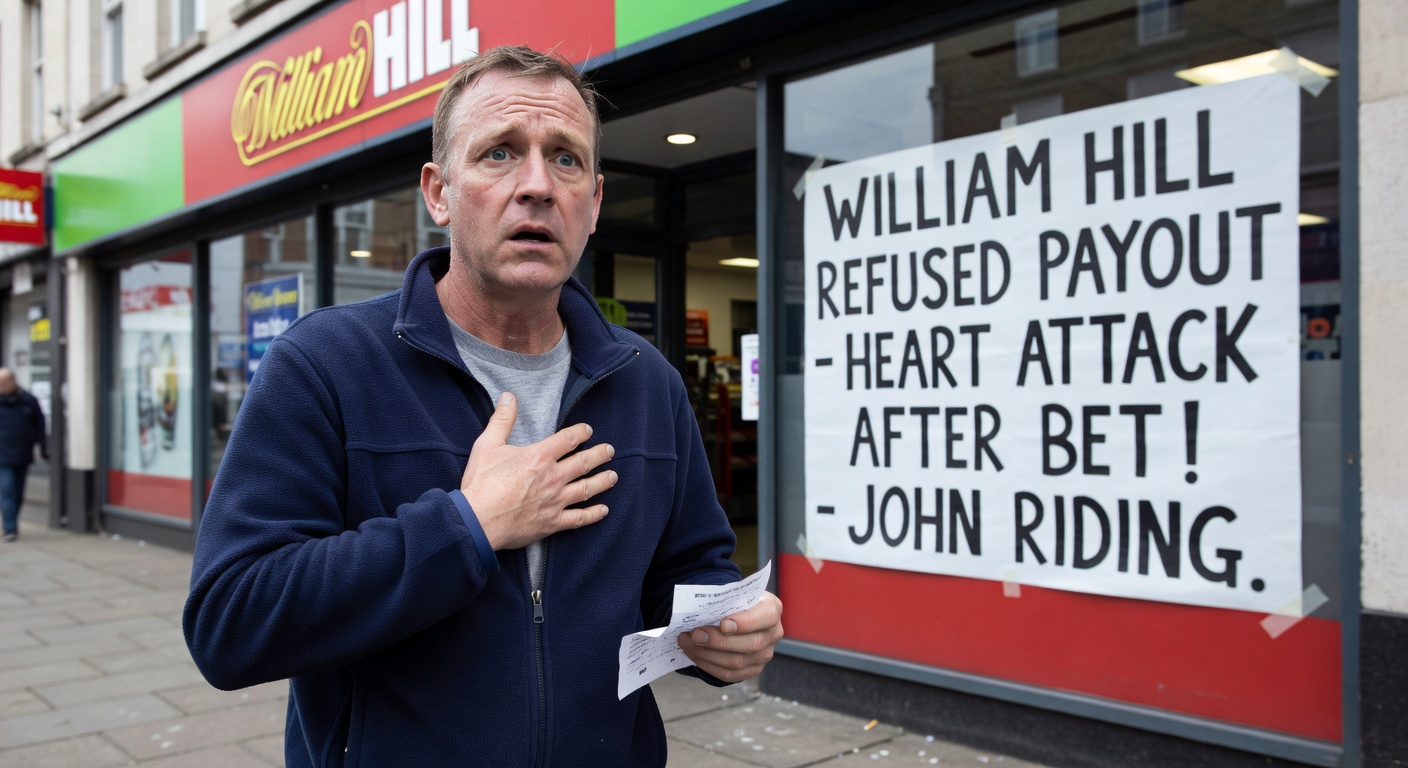
John Riding, a punter from the UK, placed what seemed like a winning bet on William Hill's platform, only for the bookmaker to withhold the substantial £285,000 payout citing a technical glitch; this refusal triggered severe health consequences for Riding, who suffered a heart attack shortly afterward. Reports detail how Riding, excited by the apparent victory from his accumulator bet, anticipated life-changing funds, but William Hill's swift denial plunged him into distress that escalated rapidly. According to BBC News coverage, the incident unfolded in early 2026, spotlighting vulnerabilities in online betting systems where technical errors collide with high-stakes customer expectations.
What's interesting here lies in the timing; as April 2026 approaches with major sporting events on the horizon, cases like Riding's underscore ongoing tensions between punters and bookmakers over payout disputes. Observers note that Riding contacted William Hill immediately after the win notification appeared on his account, yet the company maintained the bet resulted from a system malfunction, voiding the wager entirely. Riding's family later revealed he experienced chest pains and collapsed within hours, requiring urgent hospitalization; doctors confirmed the heart attack stemmed from acute stress exacerbated by the financial shock.
And while William Hill issued a standard statement regretting the customer's health scare, they stood firm on the glitch explanation, pointing to internal logs showing erroneous odds displayed briefly before correction. This stance leaves Riding, now recovering but facing mounting medical bills, in a protracted battle for the funds he believes rightfully his.
Unpacking the Bet Itself
Riding's wager centered on a multi-leg accumulator involving football matches, a popular betting format where all selections must win for the payout to trigger; data from the platform indicated odds stacking up to deliver the eye-watering return, but William Hill argued a backend error inflated those figures momentarily. Punters familiar with accumulators know these bets amplify potential rewards alongside risks, yet glitches—rare as they claim to be—can mimic legitimate wins, confusing users who see balances update in real-time.
Turns out, screenshots shared by Riding captured the moment his account reflected the £285,000 credit, complete with confirmation emails; William Hill countered with server records demonstrating the anomaly affected only a handful of bets before automated safeguards kicked in. Experts who've examined similar cases point out that such discrepancies often arise from rapid odds fluctuations during live events, but bookmakers typically honor wagers placed in good faith unless proven fraudulent. In Riding's situation, the company classified it as a voidable error under their terms, sparking outrage among those tracking the dispute.
Health Fallout and Personal Toll
The heart attack hit Riding hard, landing him in intensive care for days; medical reports attribute the episode to a combination of pre-existing conditions worsened by emotional turmoil, with stress hormones spiking in response to the payout denial. Family members described frantic calls to William Hill's support, where agents reiterated the glitch policy without flexibility, leaving Riding in limbo as his condition deteriorated. Now, as he navigates recovery in April 2026, Riding contends not just with physical rehabilitation but also the emotional weight of dashed dreams—the payout represented security for his family amid economic pressures.
People close to the case highlight how Riding, a regular punter with a history of modest wins, viewed this as his big break; the sudden reversal turned celebration into crisis, prompting questions about customer welfare protocols at major bookmakers. William Hill offered condolences and medical assistance, yet refused to budge on the payout, directing Riding toward their formal complaints process instead.
William Hill's Position and Company Background
William Hill, a longstanding UK bookmaker with roots tracing back to 1934, operates under stringent licensing that mandates clear terms on errors; their defense hinges on clauses allowing voidance of bets from pricing mistakes, a practice common across the industry to protect against losses from malfunctions. Figures from recent industry audits reveal glitches occur infrequently—less than 0.01% of wagers affected annually—yet when they do, disputes like Riding's inevitably follow, testing the balance between technical integrity and punter trust.
But here's the thing: while William Hill emphasizes robust systems, past incidents have drawn scrutiny; for instance, a 2023 probe by the Ontario Lottery and Gaming Corporation—which oversees similar operations in Canada—highlighted how transparent communication during errors prevents escalations, a lesson echoing in Riding's ordeal. Company spokespeople reiterated that payouts exceeding certain thresholds undergo manual review, and Riding's bet flagged immediately due to anomalous odds, leading to the swift voiding.
Those who've studied bookmaker operations observe that accumulators, with their compounded odds, amplify glitch visibility; William Hill's scale—handling millions of bets daily—means even minor hiccups can yield outsized claims, pressuring their resolution teams to enforce policies rigorously.
Broader Echoes in Punter Disputes
This case resonates because it mirrors patterns where technical issues intersect with human stakes; take one parallel from 2025, where a Scottish punter pursued a £100,000 claim against a rival firm after a similar display error, eventually settling out of court after months of wrangling. Riding's escalation to health crisis sets it apart, though, prompting calls from advocacy groups for mandatory stress support during disputes. Observers note that as online betting surges—UK figures show a 15% volume increase year-over-year—glitches persist despite AI-driven safeguards, fueling a steady stream of complaints.
Yet William Hill maintains their process remains fair, with independent adjudication available via industry bodies; Riding has filed formally, awaiting review that could stretch into summer 2026. Punters who've faced voids often discover terms buried in fine print govern such outcomes, but emotional tolls like Riding's add urgency to demands for reform.
It's noteworthy that in April 2026, with Premier League playoffs ramping up, betting volumes spike, heightening glitch risks; data from European monitoring indicates operators now deploy real-time anomaly detection, yet human oversight lags, as seen here.
Next Steps and Ongoing Developments
Riding pursues multiple avenues, from internal appeals to potential small claims action; his legal team argues the win confirmation constituted a binding contract, challenging William Hill's unilateral void. Meanwhile, the bookmaker prepares evidence logs for any hearing, confident in their technical audit trails. Supporters rally online, sharing stories of honored glitch wins elsewhere, pressuring resolution.
And so the saga continues, with Riding focusing on health while his claim hangs in balance; updates as of mid-April 2026 show no payout forthcoming, keeping the dispute in headlines.
Conclusion
John Riding's encounter with William Hill encapsulates the high-wire act of modern betting, where a glitch can unravel fortunes and health alike; while bookmakers safeguard against errors, punters bear the fallout, as this £285,000 saga reveals. Resolution remains pending, but the case lingers as a stark reminder of stakes beyond the odds—technical slips that cascade into real-world crises. Those monitoring the industry watch closely, knowing such disputes shape policies ahead.