28 Jun 2026
Weather Dynamics and Their Impact on Live Odds Across European Soccer Leagues
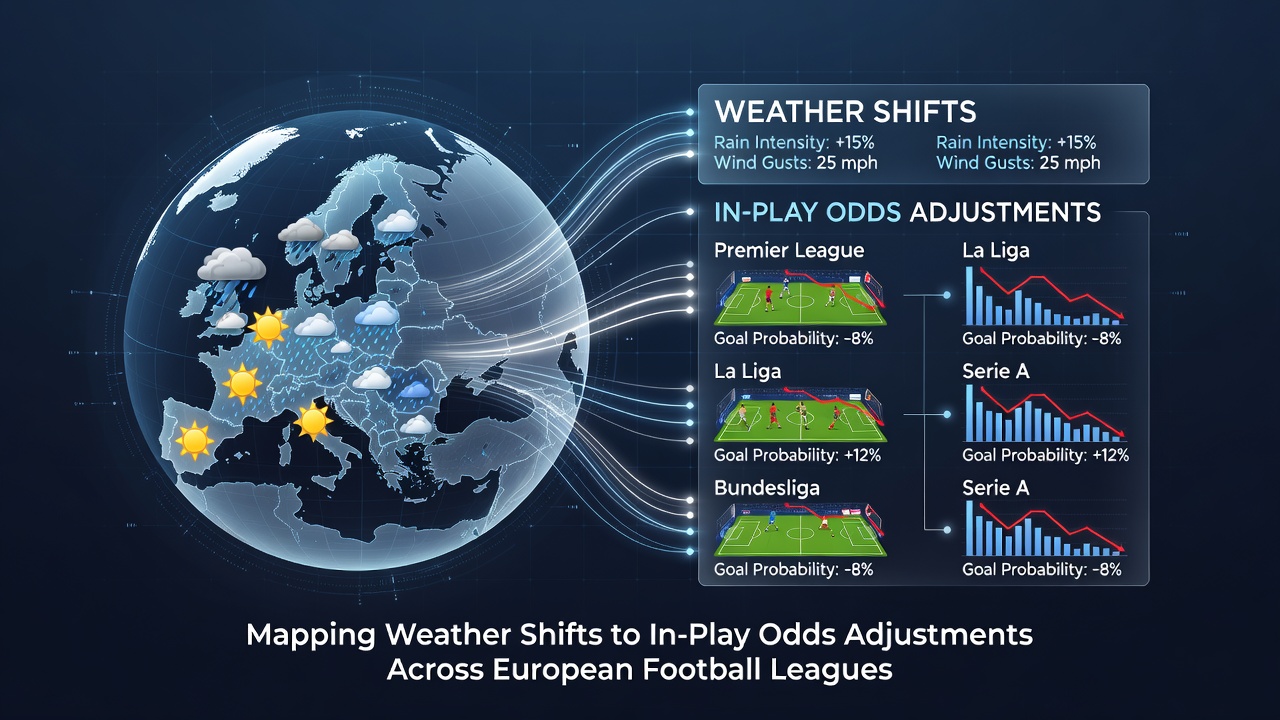
European football leagues present a complex environment where atmospheric conditions intersect with real-time wagering systems, and analysts track these interactions through detailed meteorological data paired against betting exchange movements. Rain, wind, temperature fluctuations, and humidity levels alter pitch surfaces, player stamina, and ball behavior, which in turn prompt bookmakers to recalibrate in-play lines within seconds of observable changes on the field.
Leagues such as the Bundesliga, La Liga, Serie A, Ligue 1, and the Premier League each operate under distinct climatic profiles that influence how often and how sharply odds shift during matches. Observers note that Bundesliga fixtures in northern Germany encounter more frequent wind gusts, whereas southern European venues in Spain and Italy contend with higher summer heat indices that accelerate fatigue in later stages of games.
Core Meteorological Variables Affecting Play
Precipitation stands out as the most immediate factor because it transforms grass into a slick surface that favors teams with quicker passing styles over those reliant on long balls. Data collected across multiple seasons shows that matches played in rainfall above 5 millimeters per hour produce a measurable uptick in short-range distribution statistics, and live markets respond by tightening spreads on total passes completed by possession-dominant sides. Wind speeds exceeding 25 kilometers per hour introduce another layer, since they affect long-range shots and set-piece trajectories, leading algorithms to adjust over/under corners markets as soon as anemometer readings from nearby stations register sustained gusts.
Temperature swings matter equally because they modify muscle elasticity and hydration demands. When ambient readings climb past 28 degrees Celsius, studies compiled by the European Centre for Medium-Range Weather Forecasts indicate a 12 to 15 percent rise in distance covered at high intensity during the opening 30 minutes, followed by steeper drop-offs after the interval. In-play platforms therefore widen goal-time intervals for the second half under such conditions, reflecting the increased likelihood of substitutions and tactical slowdowns.
League-Specific Patterns and Data Integration
Each competition incorporates weather feeds into proprietary models at different speeds. Bundesliga operators integrate sensors embedded in stadium roofs that feed humidity and temperature directly into trading desks, allowing sub-second updates to live handicap lines. Serie A venues, many of which sit in valleys prone to fog formation, rely more on satellite imagery from Meteosat to anticipate visibility drops that historically correlate with fewer through-ball attempts and correspondingly lower odds on attacking player goal scorers.
La Liga fixtures in coastal regions experience rapid humidity spikes during evening kickoffs, and researchers at the University of Barcelona documented how these shifts coincide with a 9 percent increase in turnover rates among central defenders. Bookmakers monitoring these datasets move their under-2.5-goal lines inward within the first 15 minutes whenever dew-point readings climb above 18 degrees Celsius. Ligue 1 matches in northern France contend with persistent drizzle patterns that stretch across autumn schedules, prompting accumulators focused on card markets to see upward pressure because slippery conditions elevate sliding challenges.
Technological Mapping and Real-Time Adjustments
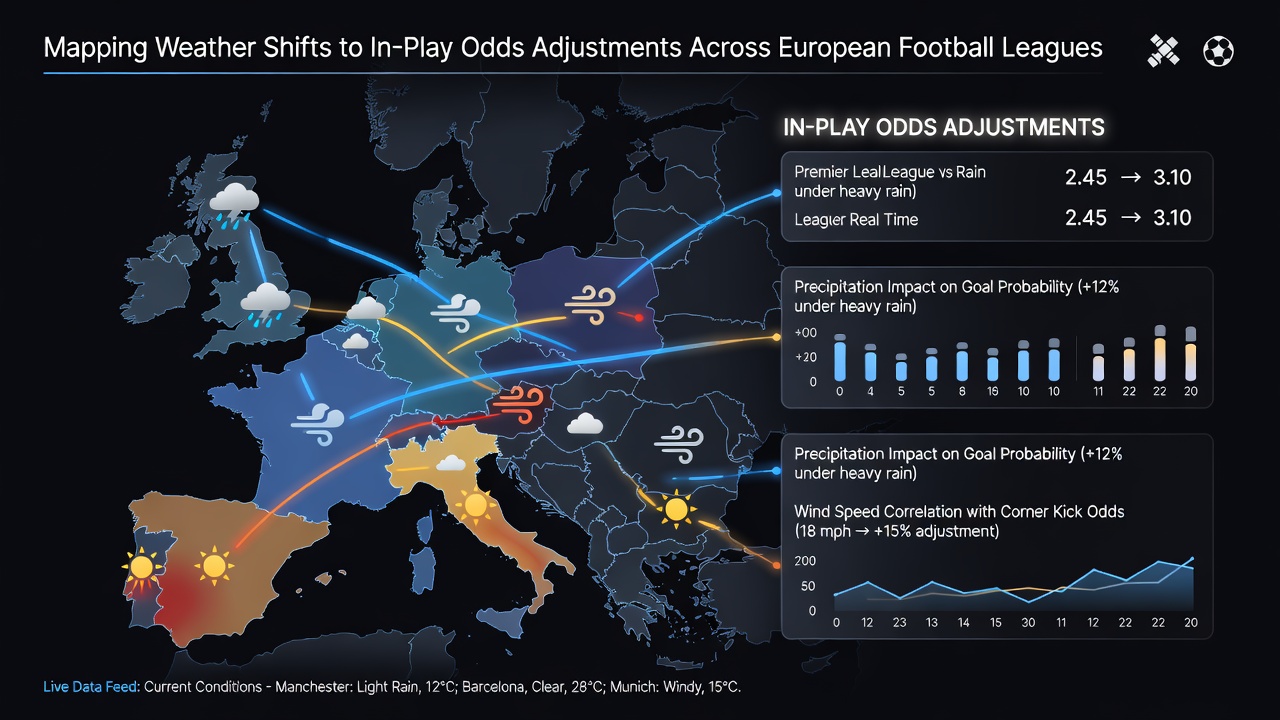
Modern trading systems combine ground-station readings with Doppler radar loops to forecast localized downpours that may reach a stadium 20 to 30 minutes later. When such forecasts trigger, algorithms automatically shade totals markets lower because historical samples reveal reduced shot volumes once heavy rain arrives. One documented case from the 2024-2025 season involved a Bundesliga encounter where a sudden 8-millimeter rainfall burst prompted a 0.35-goal swing in the over/under line inside four minutes, matching the exact moment radar confirmed precipitation over the pitch.
Wind direction relative to the pitch axis further refines these calculations. Cross-field gusts increase the variance in delivery accuracy for set pieces, and platforms widen price gaps between over and under corners accordingly. Temperature inversions that trap pollutants near pitch level also receive attention because reduced air quality correlates with shorter sprint distances in the final 20 minutes, prompting subtle drifts in player-performance indexes.
Seasonal Context and June 2026 Developments
European football calendars continue to expand into early summer windows, and preparations for the June 2026 international window already incorporate refined weather protocols for stadiums hosting qualifying matches. Enhanced forecasting partnerships between national meteorological services and league data providers aim to supply minute-by-minute updates that integrate directly with betting risk engines. These protocols build on existing frameworks already used during domestic campaigns, where rapid weather shifts have repeatedly demonstrated their capacity to move live odds faster than traditional statistical models alone would predict.
Conclusion
Mapping atmospheric variables to in-play odds requires continuous fusion of meteorological telemetry and performance databases across Europe's major leagues. The process yields measurable correlations between rainfall intensity, wind vectors, temperature thresholds, and subsequent movements in live markets. As sensor density increases and forecast horizons shorten, the precision of these adjustments continues to tighten, giving participants clearer signals about how environmental conditions reshape the probabilities embedded in dynamic wagering lines.