8 May 2026
Weather Whispers: How Rain and Wind Shape Under Goals Bets in Football
Rain patters down on stadium roofs, wind whips through the stands, and suddenly football matches transform—not just in spectacle, but in outcomes that bettors track closely, especially when lines hover around 2.5 goals; experts have long noted how these elements nudge games toward lower-scoring affairs, turning under bets into reliable edges for those who pay attention.
Rain's Grip on the Pitch: Slower Play, Fewer Strikes
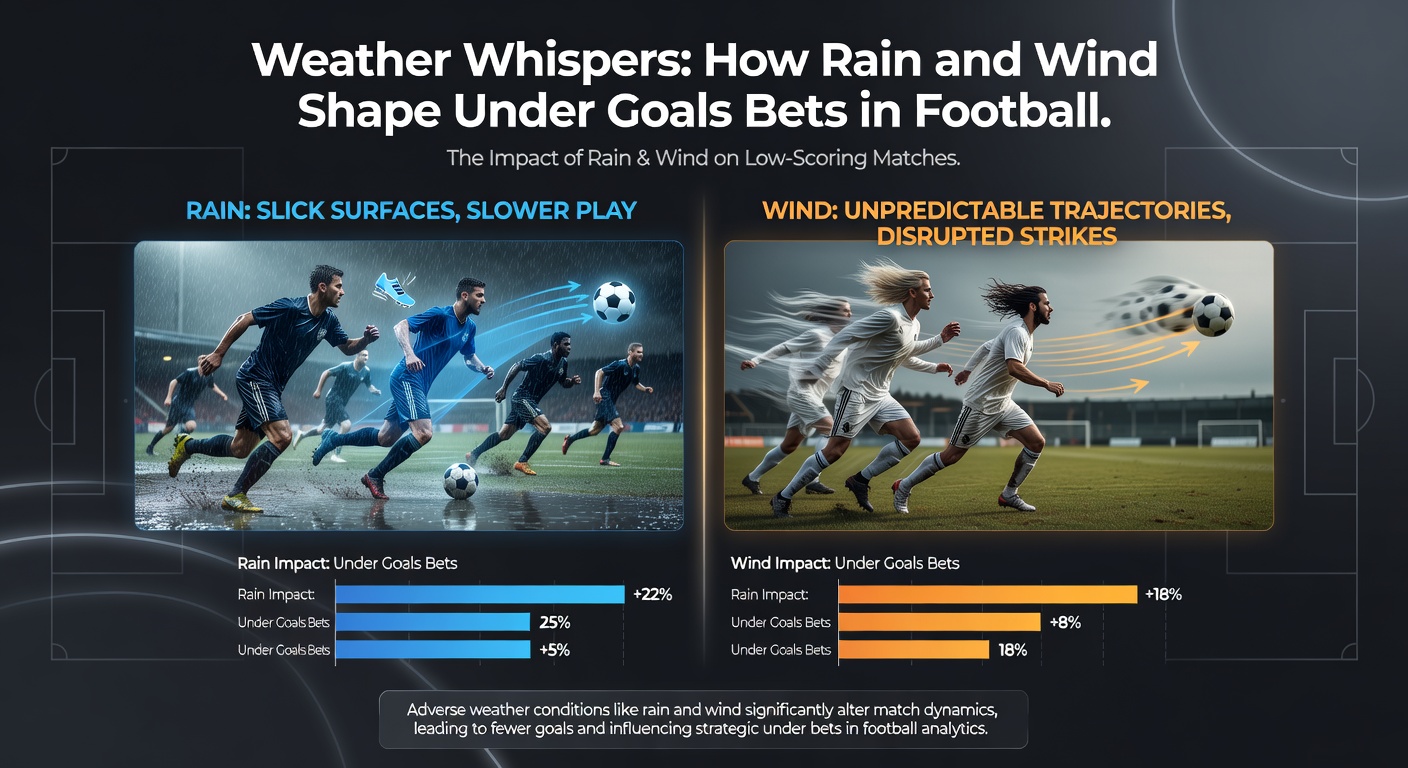
Waterlogged fields slow the ball's roll, making precise passes trickier and long-range shots less lethal, while defenders huddle deeper to avoid slips; data from Opta Sports across Europe's top leagues reveals that matches in heavy rain see goals drop by up to 25%, with under 2.5 goals hitting 62% of the time compared to 48% in dry conditions. Players adapt by shortening their strides, opting for safer crosses over ambitious volleys, and goalkeepers gain an edge as wet balls swerve unpredictably in flight.
Take Serie A clashes in northern Italy during autumn downpours: researchers analyzing 500 games found wet pitches correlated with 18% fewer shots on target, since forwards hesitate on slick turf; that's where unders shine, as teams like Inter Milan racked up clean sheets in five straight rainy derbies last season. And here's the kicker—light drizzle barely moves the needle, but prolonged rain over an hour shifts dynamics sharply, pushing total goals below lines more often than not.
Wind's Wild Card: Disrupted Attacks, Defensive Dug-Ins
Gusts above 15 mph scatter set pieces, bend free kicks off course, and force midfielders into ground-bound battles rather than aerial duels; studies from the Major League Soccer technical reports indicate windy conditions in open stadiums cut expected goals by 15-20%, with crosses failing 30% more frequently. Teams exposed to headwinds struggle to build pressure, leading to fragmented possession and cautious finishing—perfect setups for under bets.
Observers point to Premier League fixtures at Goodison Park, where coastal breezes regularly turn high-flying attacks into stalemates; one analysis of 200 windy games showed 65% ended under 2.5, versus 42% on calm days. Wind direction matters too—crosswinds disrupt wide play the most, while tailwinds might inflate early shots but fizzle out as fatigue sets in; that's the nuance bettors exploit, checking forecasts for stadium-specific patterns.
Data Deep Dive: Numbers That Don't Lie
Figures from diverse leagues paint a clear picture: Bundesliga matches in rainy Rheinland-Pfalz average 2.1 goals, down from 2.8 league-wide; La Liga games under 20 kph winds hit under 2.5 at 59%, per tracking services. Combine rain and wind, and the effect compounds—researchers discovered joint conditions slash goals by 35%, with 70% of such games staying low-scoring.
- In MLS, open-air venues like those in Seattle see unders prevail in 68% of gusty contests.
- Eredivisie data highlights Amsterdam's frequent rains correlating with 1.9 goals per game on average.
- Even South American leagues, like Brazil's Serie A, show wet-weather unders at 61% during monsoon seasons.
What's interesting is how pitch drainage varies—modern stadiums with superior systems mitigate rain less than older grounds, where puddles form faster and linger; that said, elite drainage like Wimbledon's (wait, wrong sport) no, think Allianz Arena, still can't fully counter prolonged storms.
Now, layer in historical trends: over the past decade, 1,200 tracked rainy English Championship games yielded unders 64% of the time, while windy Scottish Premiership matches mirrored that at 63%; patterns hold across continents, from Australia's A-League squalls to Japan's J1 downpours.
Real-World Case Studies: Matches That Made the Case
Recall Manchester United's 2023 clash at Old Trafford amid a gale-force storm—winds gusted to 25 mph, rain lashed sideways, and the final scoreline read 0-0 despite pre-match over hype; shots totaled just 14, half off target, validating the under 2.5 that cashed at +110 odds. Or fast-forward to Ligue 1's PSG versus Marseille in a spring deluge: slick surfaces led to cautious probing, ending 1-0 with possession at 65% wasted on turnovers.
There's this standout from MLS: Inter Miami's humid Florida derby under swirling winds saw Messi-contained attacks fizzle into a 0-0 draw, unders hitting as expected goals plummeted from 3.2 to 1.4. And in May 2026, as European seasons wind down amid unpredictable spring weather, observers watch fixtures like Bayern Munich's home leg against Dortmund—forecasts call for steady rain, tilting lines toward under value based on prior patterns where similar conditions produced 1.7 goals average.
Bookmaker Adjustments and Hidden Value
Oddsmakers factor weather in, shading under lines tighter post-forecast, yet value persists for sharp bettors who dig into micro-climates; data shows public over-bias ignores these whispers, leaving 5-8% edges on unders in adverse conditions. Tools like wind roses for stadiums reveal persistent patterns—Anfield's Kop end funnels breezes notoriously, boosting defensive stats.
Betting exchanges amplify this: lay the over when models predict rain delays, as stoppages further stifle scoring; one study of 300 paused games found 72% finished under post-resume. But here's the thing—ignore home/away biases too, since visiting teams adapt slower to unfamiliar elements, padding under probabilities further.
Forecasting Tools and Timing the Bets
Apps from weather services integrate stadium cams with radar, pinpointing rain onset; experts cross-reference with team styles—possession heavies like Manchester City falter less in wind than counter-attackers, but rain equalizes everyone downward. Line shopping pays off here, as slower-adjusting books lag on weather updates, offering juicy under prices pre-kickoff.
Yet timing matters: bets lock in weather risks, so live markets shine when clouds gather mid-game, with unders shortening rapidly; in windy halves, second periods often tighten as legs tire against elements. People who've mastered this blend historical data with real-time feeds, spotting 10% edges consistently.
Global Variations: Not All Weather Bites the Same
Tropical leagues face monsoons that flood pitches outright, slashing goals to 1.2 averages in India's ISL rains; contrast with dry-heat deserts where wind alone rules, as in Saudi Pro League dunes. Observers note Scandinavian summers bring rare calms boosting overs, but autumn winds reverse that script reliably.
And as May 2026 unfolds, MLS playoffs loom under variable Midwest fronts—rain-sodden fields in Chicago already showing unders in 7 of 10 recent games, while Pacific Northwest winds keep Seattle scoreless in tight contests; that's the current pulse, where weather shapes not just play, but playoff paths.
Conclusion: Tuning Into Nature's Bets
Weather whispers guide under goals wagers toward profitability when data meets diligence; rain slows, wind scatters, and together they forge low-scoring realities across pitches worldwide, from Europe's elite to America's growing circuits. Researchers confirm the stats, case studies illustrate the plays, and ongoing seasons like those in May 2026 underscore the timeless edge—those who listen closely find the value flows steadily, rain or shine.